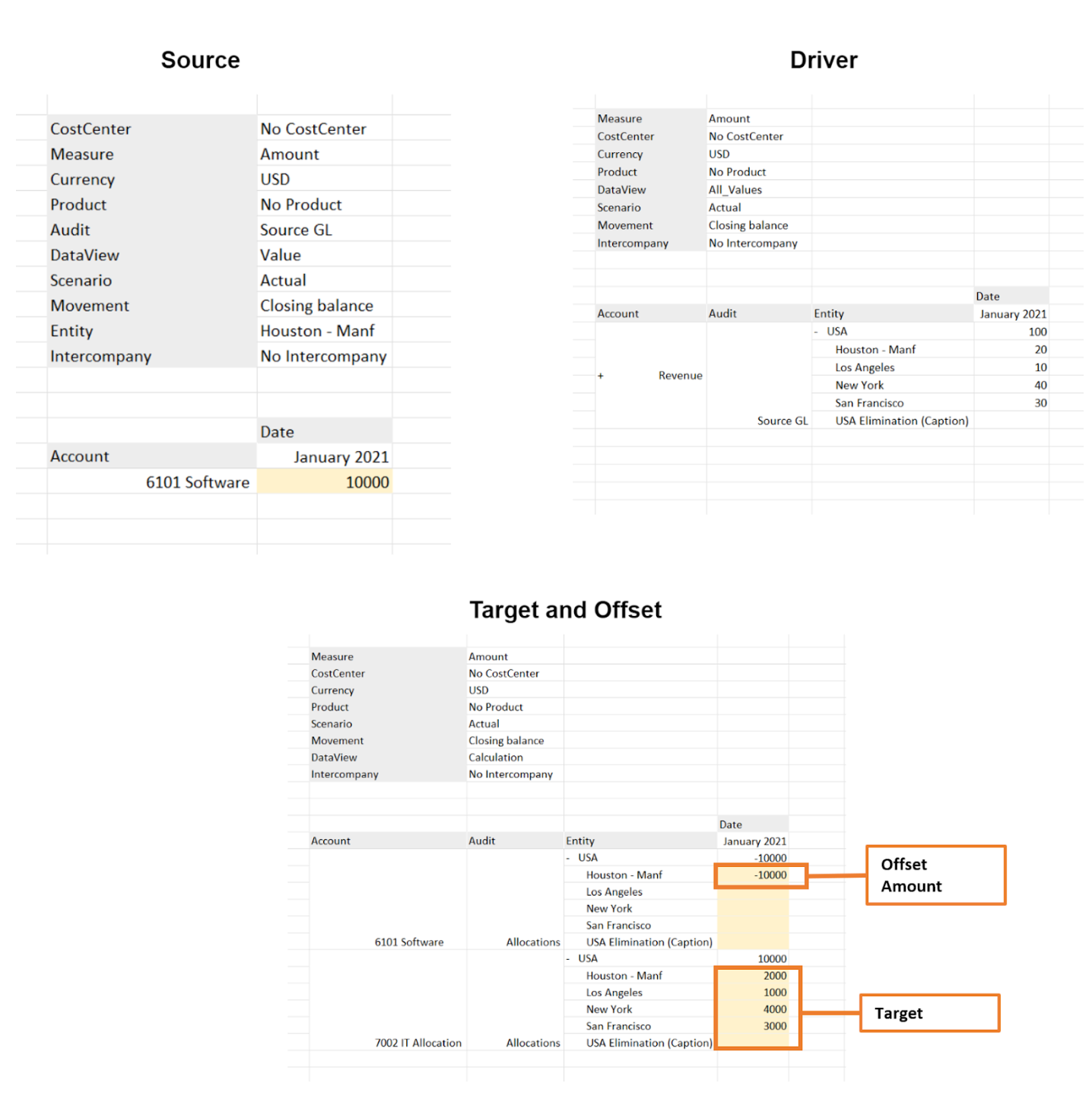
Follow this example to understand complex allocation calculations based on the allocations definition.
In this example, let's assume we have a total of $10,000 for Software to be allocated across four Entities:
- Houston - Manf
- Los Angeles
- New York
- San Francisco
The original amount is first allocated to Houston - Manf.
The allocation rule specifies that:
- 20% goes to Houston - Manf
- 10% to Los Angeles
- 40% to New York
- and the remaining 30% to San Francisco
The rule allocates, Houston - Manf would receive $2,000, Los Angeles would get $1,000, New York would get $4,000, and San Francisco would be allocated $3,000.
This allocation ensures that each Entity receives the appropriate amount for its needs.